5.625
%
Positive
9
mm boe
0
%
Access to the Malaysian upstream continues to open, with Petronas offering bid rounds and late-life asset terms, but tax complexity remains an obstacle for independents. The dispute between Petronas and Sarawak's Petros over gas rights adds regulatory uncertainty. Outlook maintained because access continues to improve despite the Sarawak dispute. Outlook: Positive. Risk premia unchanged at 5.625%.
October 7, 2026
Asia - South East
mm bbl
bcf

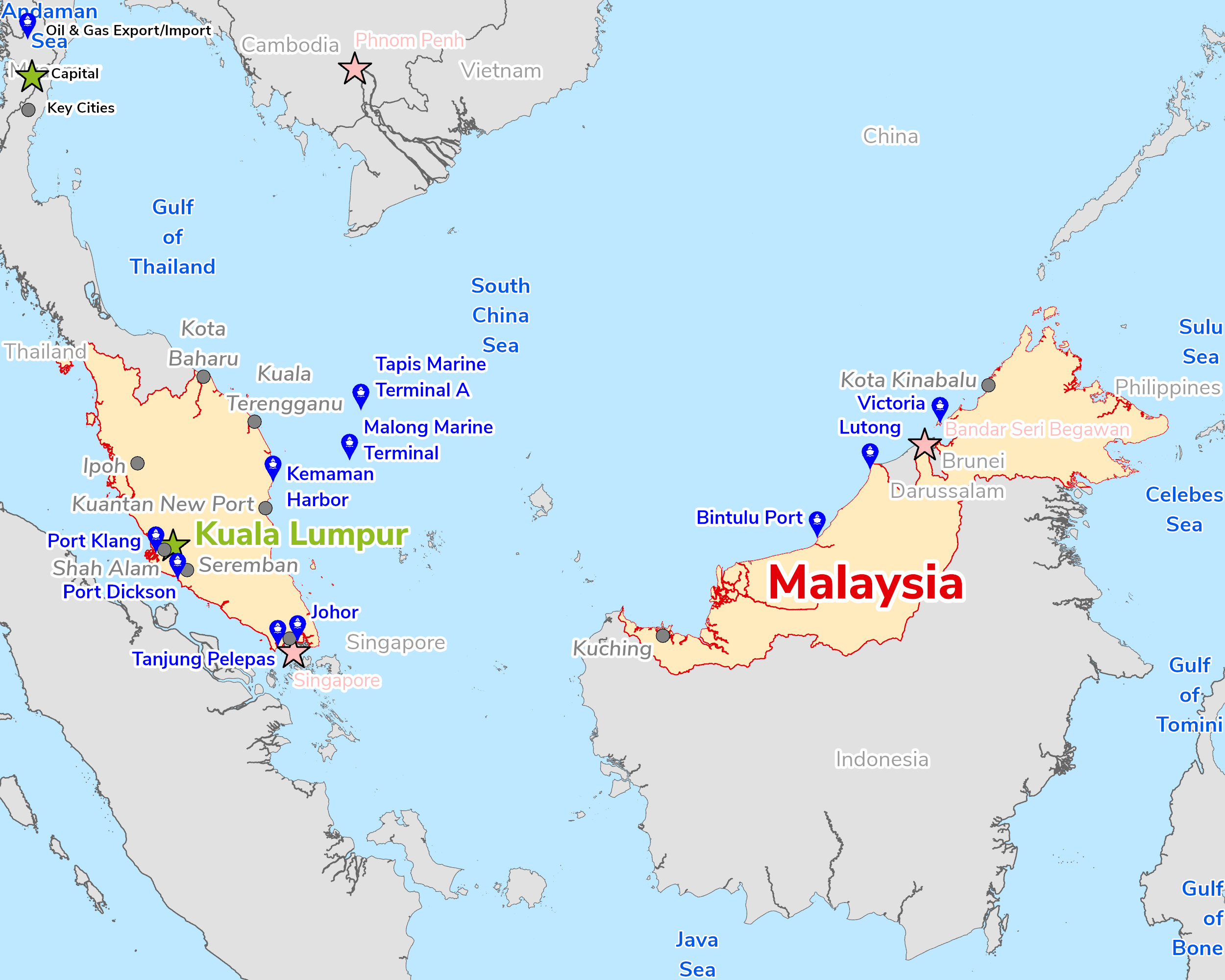
Southeastern Asia, peninsula bordering Thailand and northern one-third of the island of Borneo, bordering Indonesia, Brunei, and the South China Sea, south of Vietnam.
PSC/PSA
All licences in Malaysia are governed by production sharing contracts (PSCs), of which there are four main vintages: (i) 1976 PSC Model, (ii) Post-1985 PSC Model (conventional areas), (iii) Post-1993 PSC Model (deep-water areas), and (iv) Post-1996 PSC Model (Revenue/Cost Index). Malaysia’s PSC-based fiscal system is one of the most complex in the world, and probably counts against it in terms of barriers to entry.
Prime Minister Anwar Ibrahim's unity government has delivered relative stability and attracted large data-centre and semiconductor investment. US and UK guidance cite a generally open regime, but note bumiputera ownership policies, bureaucracy and US tariff exposure. The EIA notes that Malaysia is a major LNG exporter via Bintulu. Petronas faces declining legacy output, cost cutting and a dispute with Sarawak's state-owned Petros over gas distribution rights.
Source: ESRI, Heritage Index, HMG Foreign & Commonwealth Office, US Department of State, International Trade Administration, International Law Review, Ernst & Young, Wood Makenzie & OGA data.

© 2024 Oil & Gas Advisors Limited
Website by Rugby Web Design

