1.875
%
Positive
29
mm boe
12
%
Changes of government have revived the liberalisation of the sector, attracting more independent participants, and BP's Cypre and Shell's Manatee projects are adding gas supply. However, the hydrocarbon law is having an adverse effect, gas supply to Atlantic LNG is constrained, and the Dragon gas project depends on shifting US licensing. Outlook maintained because new gas projects and the government's openness continue to support investment. Outlook: Positive. Risk premia unchanged at 1.875%.
October 7, 2026
Caribbean
mm bbl
bcf
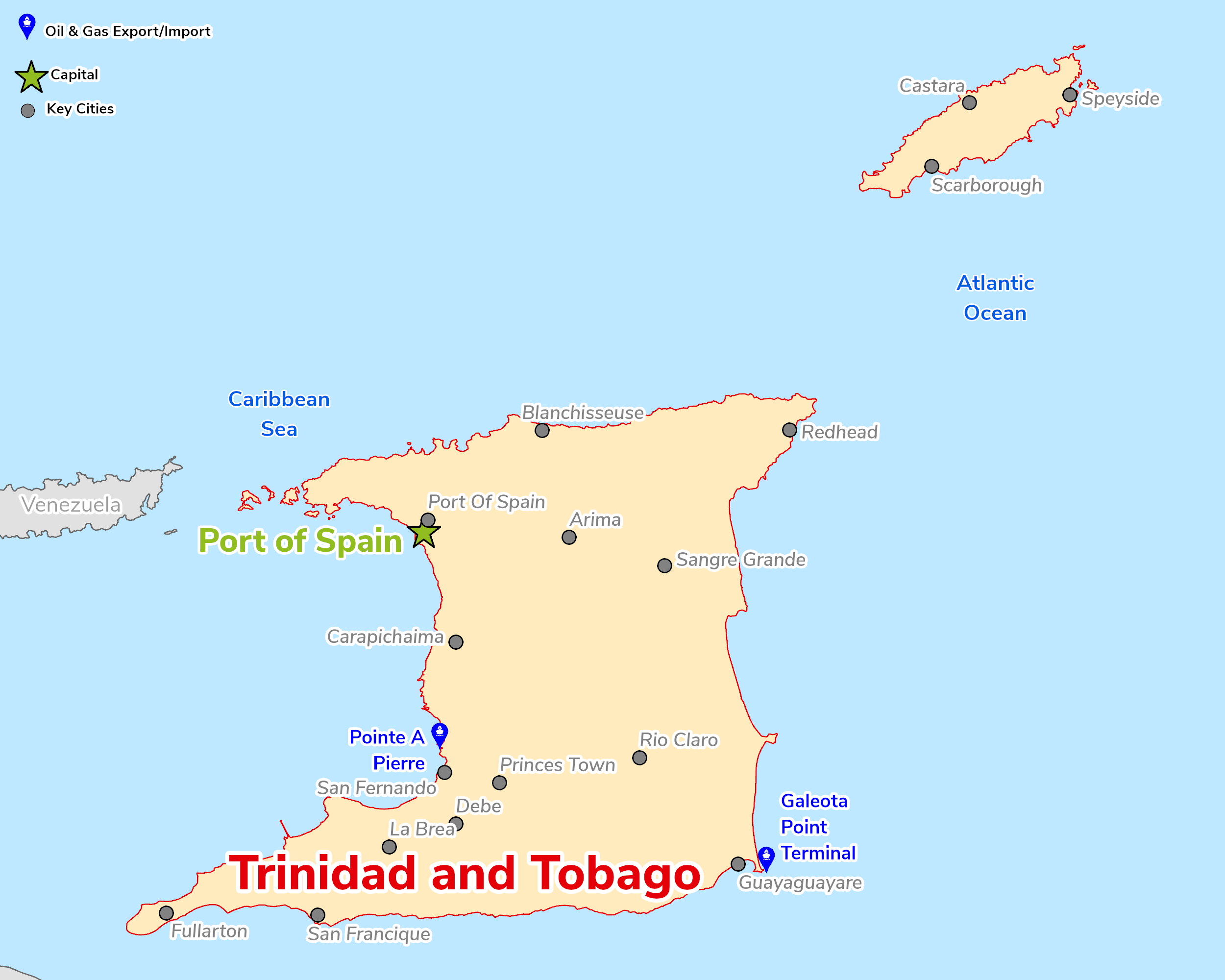
Caribbean, islands between the Caribbean Sea and the North Atlantic Ocean, northeast of Venezuela.
Multiple (PSC/Concession)
Two systems. Most acreage, including all onshore and many shallow-water blocks, is under exploration and production licences on royalty/tax terms: royalty, Petroleum Profits Tax (50% for most licences, lower for deep water), a price-linked Supplemental Petroleum Tax on oil and the Unemployment Levy. Deepwater and some shallow-water blocks awarded since the mid-1990s are PSCs, under which the State takes a share of profit petroleum and pays the contractor's taxes from its share. Companies in petrochemicals, LNG and gas transmission pay corporation tax at 35%.
Kamla Persad-Bissessar's UNC won the April 2025 election, and the government has aligned closely with US policy on Venezuela. US and UK guidance cite a mature energy sector, but note FX shortages, crime and bureaucracy. The EIA notes that declining gas output has left Atlantic LNG and petrochemical plants under-supplied, with BP's Cypre and Shell's Manatee projects adding supply, while the cross-border Dragon gas field with Venezuela depends on shifting US licensing.
Source: ESRI, Heritage Index, HMG Foreign & Commonwealth Office, US Department of State, International Trade Administration, International Law Review, Ernst & Young, Wood Makenzie & OGA data.

© 2024 Oil & Gas Advisors Limited
Website by Rugby Web Design