BB±
64
Neutral
Larger accumulations are expected in the less-explored offshore, and the first licensing round since 2007, which awarded offshore block O1 to Eni/QatarEnergy, and output at decade highs show support for new entrants. Militia clashes in Tripoli and the risk of blockades remain significant. Outlook: Neutral.
October 12, 2026
Africa - North
Onshore & Offshore
Gas
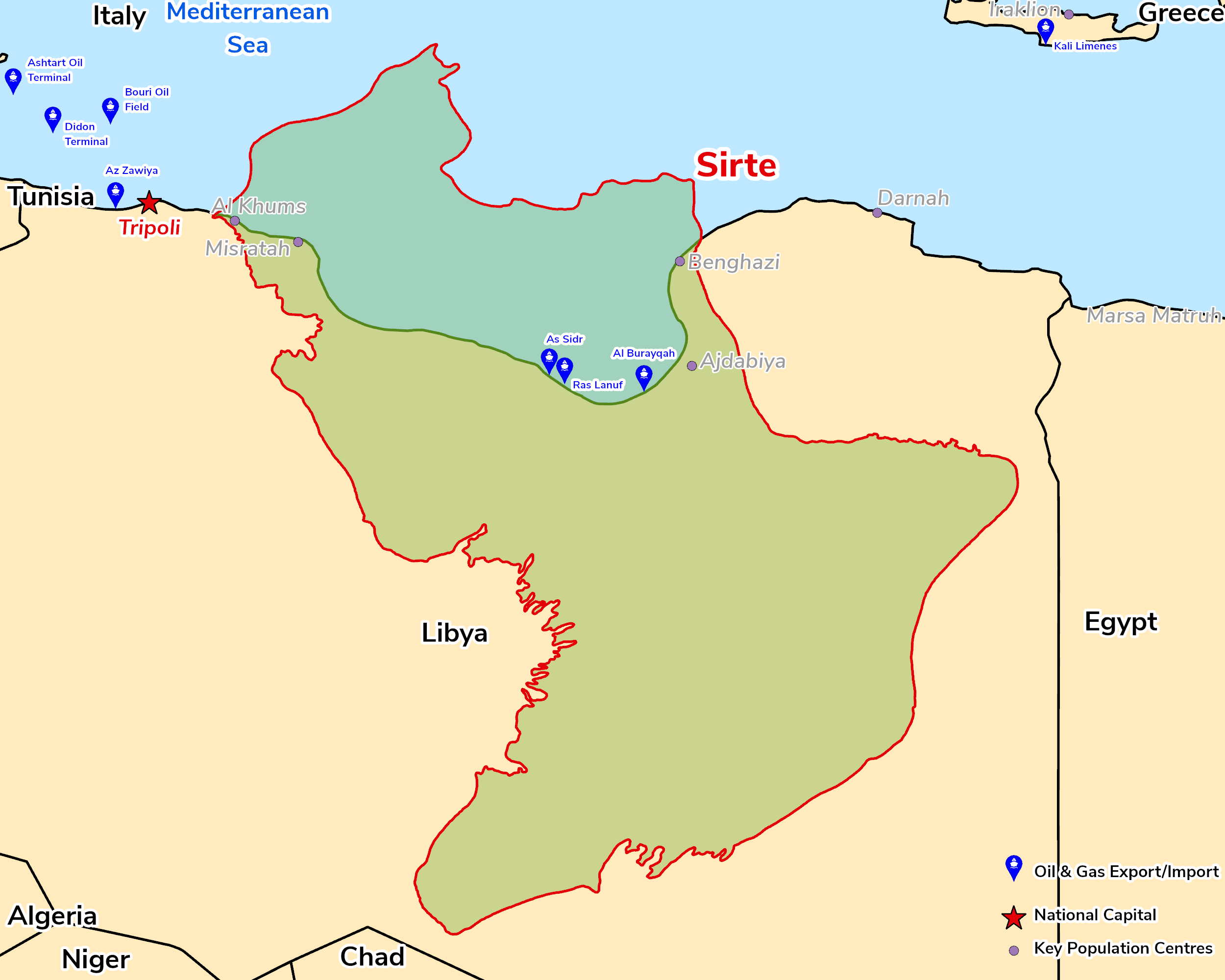
The Sirte Basin of Libya is a Late Mesozoic–Cenozoic rift basin covering c.490,000sq km that ranks 13th among the world's petroleum provinces, with known reserves of 43.1bn boe (36.7bn bbl of oil and 37.7tcf of gas). One dominant total petroleum system, the Sirte-Zelten, is recognised, with the Upper Cretaceous Sirte Shale as the primary source rock. Reservoirs range from fractured Precambrian basement, Cambro-Ordovician Gargaf and Lower Cretaceous Nubian (Sarir) sandstones to the Palaeocene Zelten Formation and Eocene carbonates, commonly bioherms, and the province contains 16 giant oil fields. Possible further petroleum systems involving Silurian and Eocene source rocks may exist in the deep offshore grabens of the Sirte Rise, where the USGS assesses more undiscovered gas than oil.
The basin has been widely explored onshore, but less so offshore, where accumulation sizes are expected to be larger. The country's first licensing round since 2007 concluded in February 2026, but only five of the 20 blocks were awarded. Winners include Eni/QatarEnergy (offshore Sirte block O1, c. 29,000sq km) and Chevron (onshore Sirte). Exports and output reached post-revolution highs in 2025, but political division continues to temper IOC appetite.
Source: ESRI, BGS, USGS & OGA data

© 2024 Oil & Gas Advisors Limited
Website by Rugby Web Design