5.750
%
Positive
5
mm boe
40
%
Germany's government has classified domestic resource development as a strategic priority, and the Merz government is more pragmatic on gas, supporting new gas-fired capacity and the N05-A field. EU climate legislation remains an unknown factor, but support for energy security is strong. Outlook maintained because the government continues to prioritise domestic supply. Outlook: Positive. Risk premia unchanged at 5.75%.
October 7, 2026
Europe - Central
mm bbl
bcf
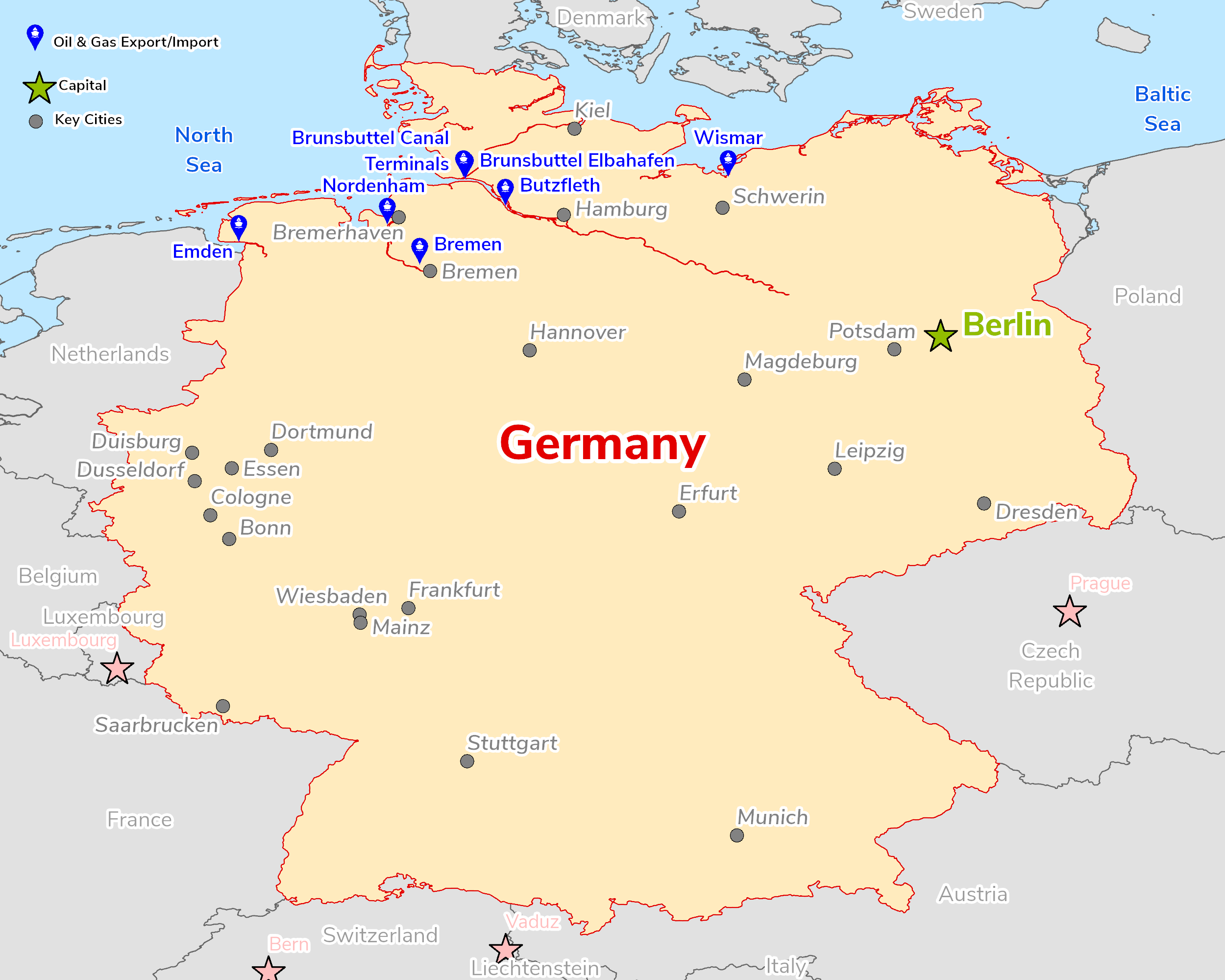
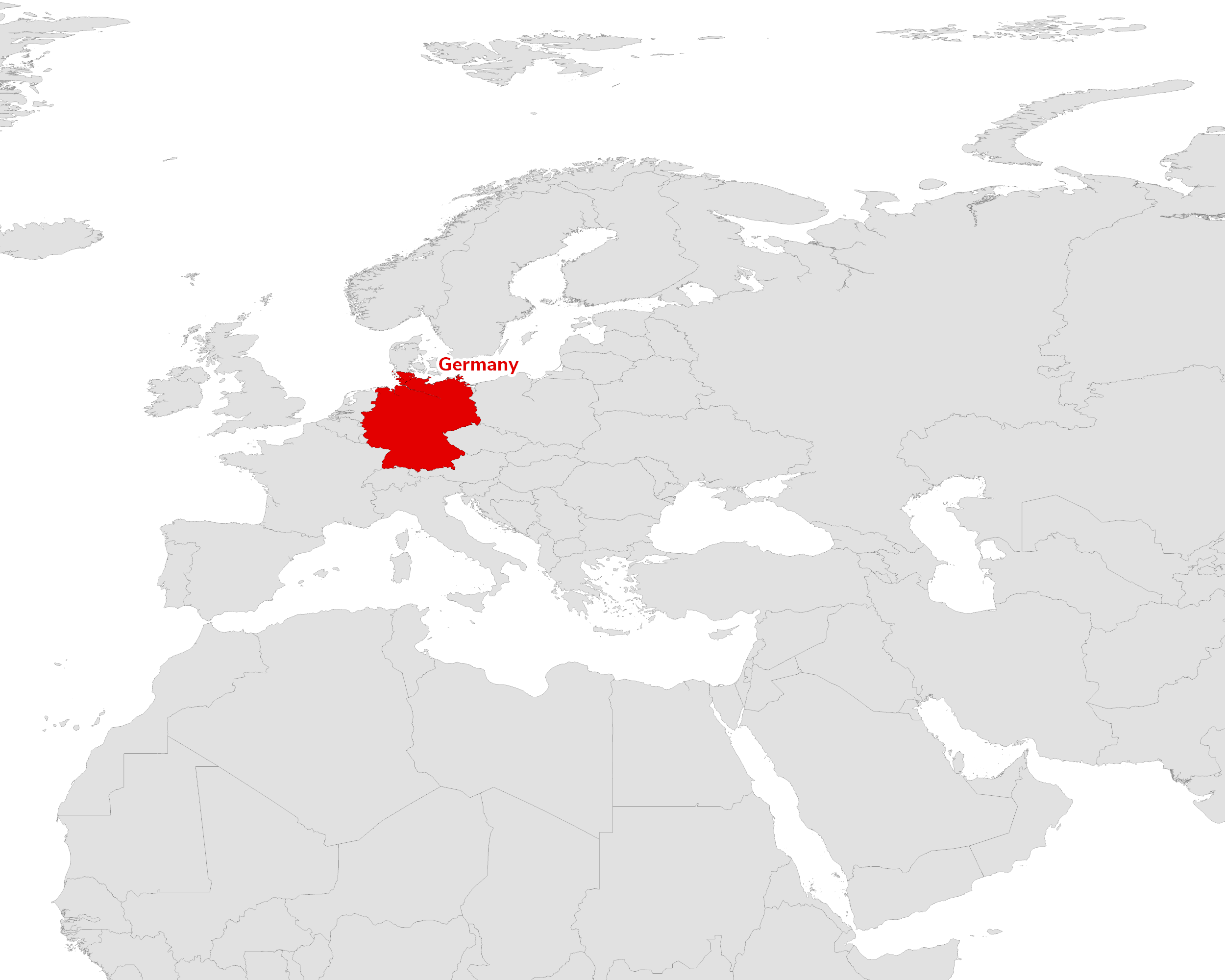
Central Europe, bordering the Baltic Sea and the North Sea, between the Netherlands and Poland, south of Denmark.
Concession
In principle, Germany does not apply a special taxation regime to the oil and gas industry, with the addition of royalties for exploration. Germany does not impose signature or production bonuses, and no state participation arrangements exist.
Chancellor Friedrich Merz's CDU/CSU–SPD coalition took office in May 2025 and reformed the debt brake to fund defence and a €500 billion infrastructure programme, aiming to end prolonged economic stagnation. US and UK guidance describe a transparent, stable market with tightening FDI screening, high energy and labour costs, and heavy bureaucracy. After 2022 Germany rapidly built FSRU-based LNG import capacity, completed its nuclear exit (April 2023) and placed Rosneft's German refining assets under trusteeship. Domestic gas production is small, although a shared North Sea field with the Netherlands (N05-A) has started production.
Source: ESRI, Heritage Index, HMG Foreign & Commonwealth Office, US Department of State, International Trade Administration, International Law Review, Ernst & Young, Wood Makenzie & OGA data.

© 2024 Oil & Gas Advisors Limited
Website by Rugby Web Design


