0.500
%
Positive
13
mm boe
7
%
The operating environment is broadly positive, and persistent fiscal deficits have not increased pressure on legislators to seek greater income from hydrocarbons. Gas discoveries at Tendrara and Anchois, international recognition of Morocco's autonomy plan for Western Sahara and strong infrastructure investment support our view. Outlook maintained because the regime remains stable and supportive. Outlook: Positive. Risk premia unchanged at 0.5%.
October 7, 2026
Africa - North
mm bbl
bcf
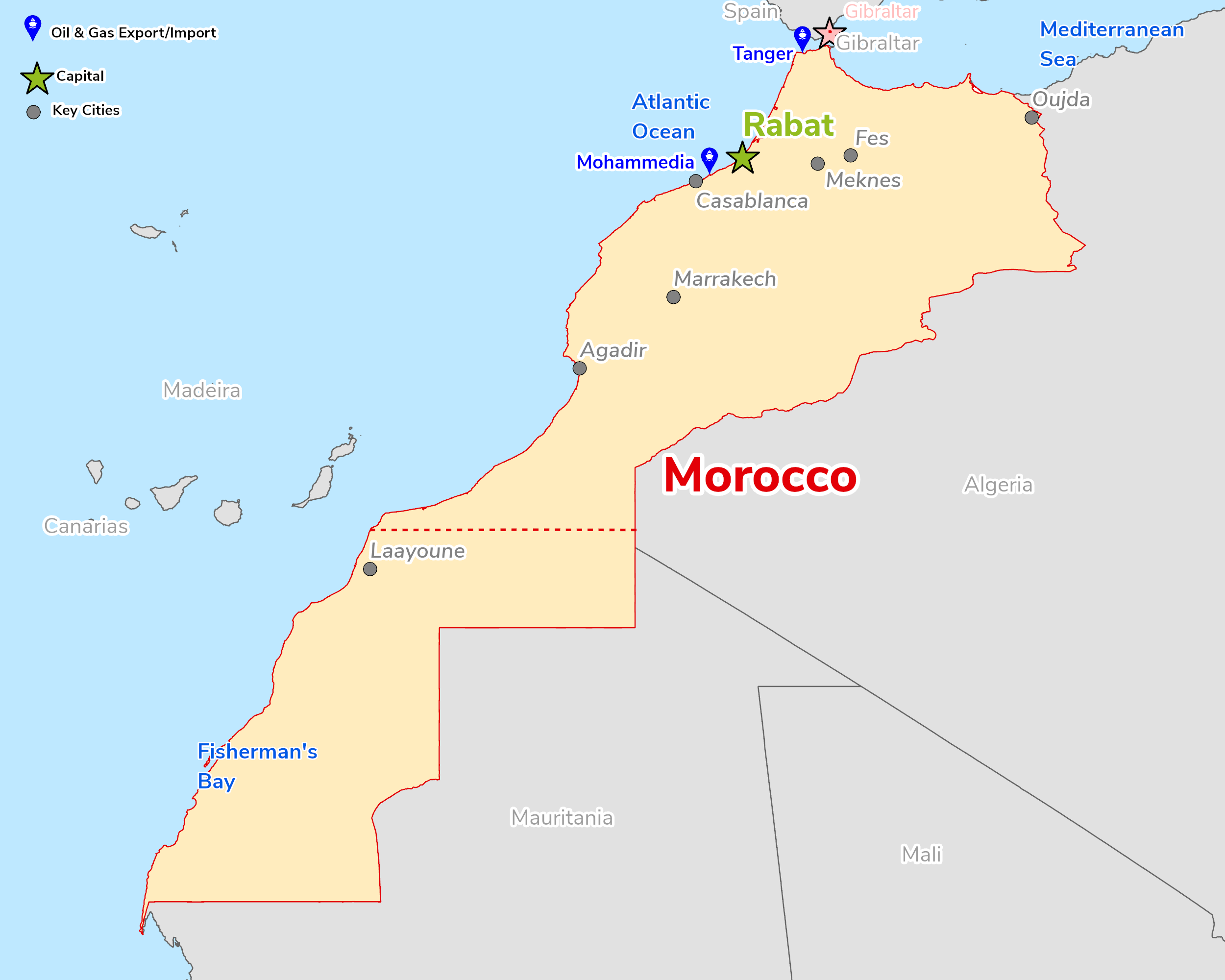
Northern Africa, bordering the North Atlantic Ocean and the Mediterranean Sea, between Algeria and Western Sahara.
Concession
Relatively simple Concession-based fiscal regime. Royalty rates vary by location and oil/gas, with lower rates for deep-water (>200m) operations. In addition to corporate income tax there is an additional profits tax (the National Solidarity Levy). State-owned L’Office national des Hydrocarbures et des Mines ("ONHYM") has the option to participate in an exploration agreement or commercial discovery development for an equity stake of up to 25%.
Morocco is a stable monarchy, although youth-led 'GenZ 212' protests over public services erupted in late 2025. A UN Security Council resolution in October 2025 endorsed its autonomy plan for Western Sahara. US and UK guidance highlight infrastructure, automotive and renewables investment and the US–Morocco FTA, while noting bureaucracy and corruption. The EIA notes negligible oil and small gas output (Sound Energy's Tendrara and Chariot's Anchois). Morocco imports LNG via Spain using the reversed Maghreb–Europe pipeline and is expanding renewables and green hydrogen.
Source: ESRI, Heritage Index, HMG Foreign & Commonwealth Office, US Department of State, International Trade Administration, International Law Review, Ernst & Young, Wood Makenzie & OGA data.

© 2024 Oil & Gas Advisors Limited
Website by Rugby Web Design