
AAA+
1
Positive
The Permian remains the world's leading shale basin, and the EIA expects record output of c. 6.8mm b/d in 2026, supported by higher oil prices well above breakevens. Federal policy strongly supports oil & gas investment, although steel tariffs and price volatility linked to the Iran conflict weigh on costs and planning. Outlook: Positive.
October 12, 2026
Americas - North
Onshore
Oil
The PRMB can be arranged in to two parts, the Midland, which accumulated large amounts of clastic sediments from the Ouachita orogenic belt during the Pennsylvanian and the Delaware Basin. In the Midland, sediments were deposited and formed a thick subaqueous deltaic system. In the Delaware Basin, a structural low that provided an inlet for marine water during the Permian. minor sedimentation was received from the low coastal plains that surrounded it. While the Midland Basin was almost full of sediment by the Middle Permian, the Delaware became host to reefs built by sponges, algae, and microbial organisms.
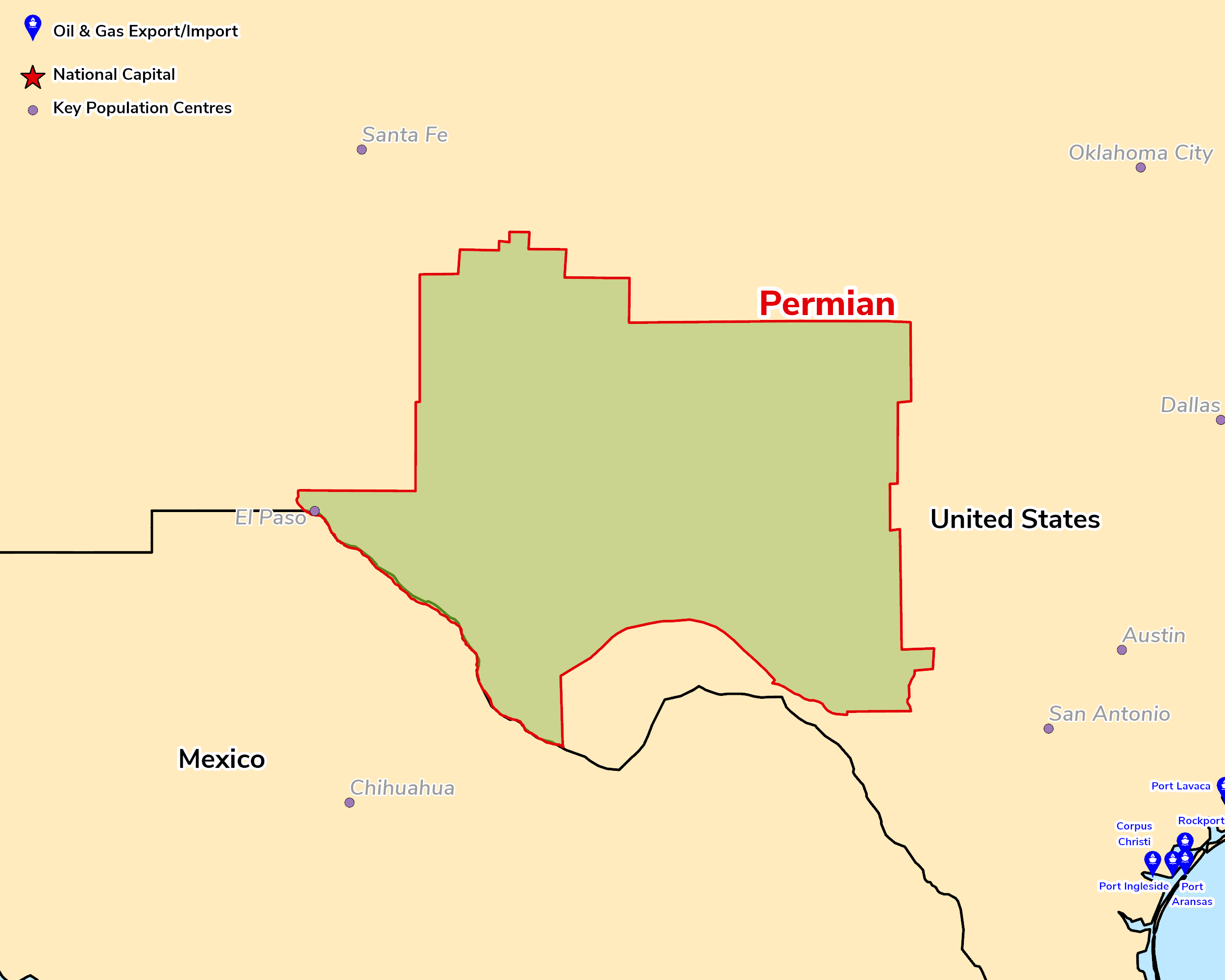
The Permian is the country's largest oil-producing region and the main driver of record national output. The EIA forecasts Permian production of about 6.8mm b/d in 2026, up 3% year on year, supported by WTI averaging c. US$84/bbl through August 2026 against breakevens of US$63–69/bbl. Consolidation has concentrated acreage among large operators, and growth increasingly comes from efficiency gains, such as longer laterals, rather than higher rig counts.
Source: ESRI, BGS, USGS & OGA data

© 2024 Oil & Gas Advisors Limited
Website by Rugby Web Design