8.000
%
Negative
92
mm boe
99
%
The referendum banning operations in the Yasuní National Park has removed the ITT field from Petroecuador's portfolio. President Noboa has sought private investment in oil blocks, but voters rejected his November 2025 referendum proposals, pipeline outages persist and security has deteriorated sharply. Outlook maintained because security risks and policy constraints persist despite a pro-investment president. Outlook: Negative. Risk premia unchanged at 8%.
October 7, 2026
Americas - South
mm bbl
bcf
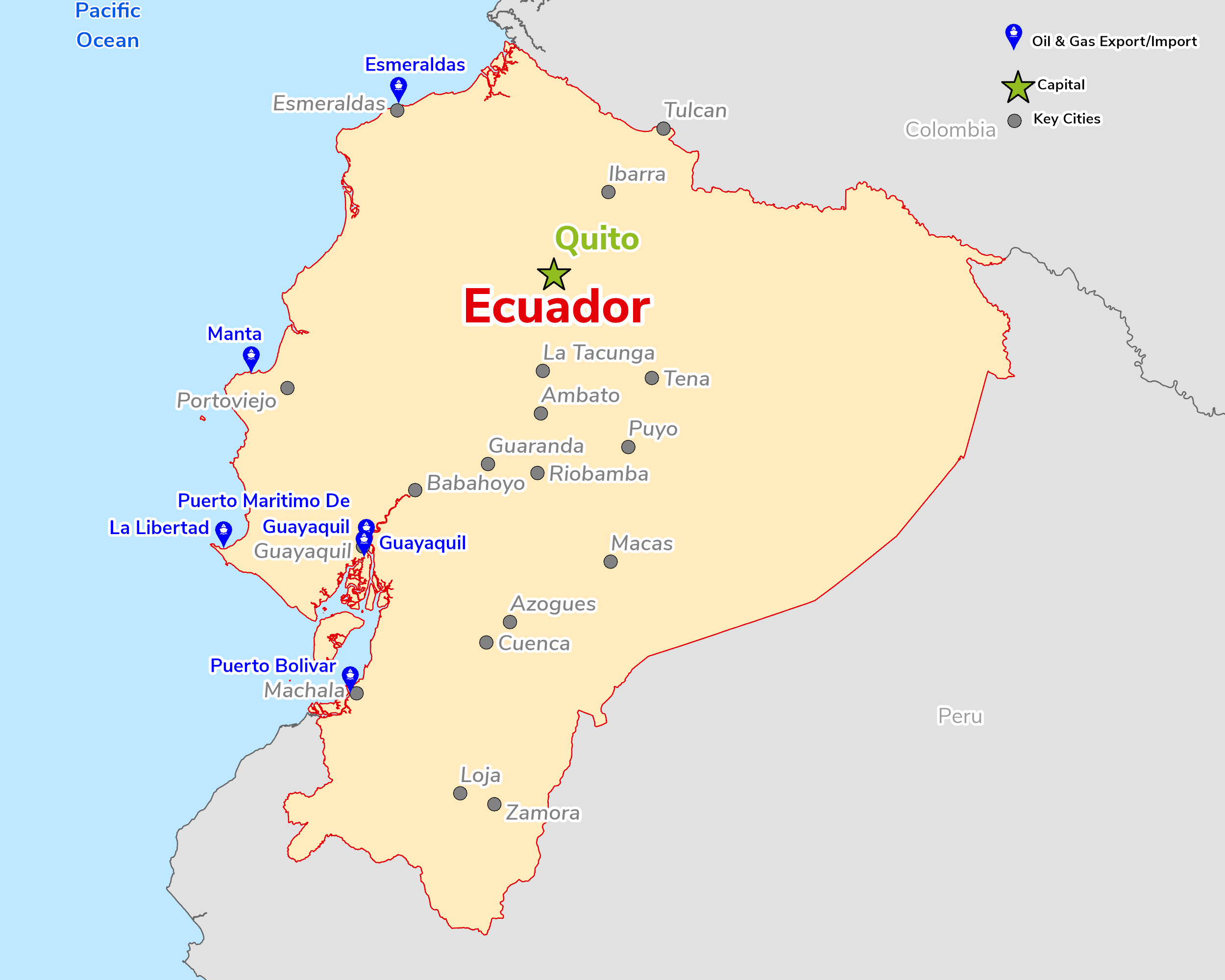
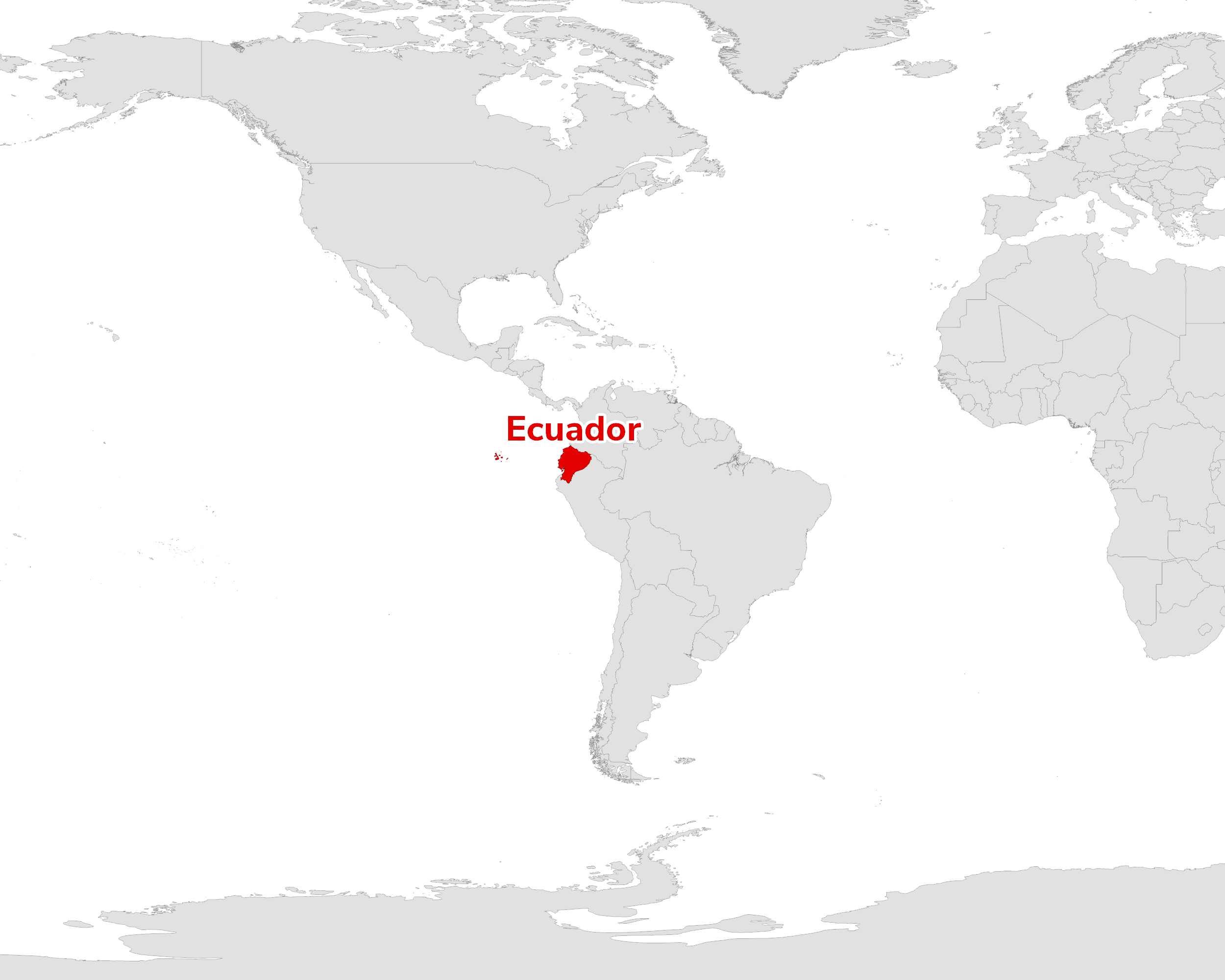
Western South America, bordering the Pacific Ocean at the Equator, between Colombia and Peru.
KSA/KSC
Mainly service-type. Since 2010 most private upstream activity has been under service contracts, with the contractor paid a fixed per-barrel tariff and Petroecuador owning all production. Reforms in 2018 allowed new and migrated contracts under the participation (production sharing) model, used in the Intracampos rounds, where the contractor takes a biddable share of production and pays income tax. Petroecuador remains the dominant producer.
President Daniel Noboa was re-elected in April 2025, but the country faces a severe gang-driven security crisis under an ongoing 'internal armed conflict' declaration, and voters rejected his November 2025 referendum proposals. US and UK guidance cite insecurity, legal uncertainty and contract-arbitration history, alongside an IMF programme and dollarisation. The EIA notes declining output from Petroecuador's mature Amazon fields. The 2023 referendum ordering the closure of the Yasuní ITT block, together with repeated pipeline ruptures caused by river erosion, are key risks to production.
Source: ESRI, Heritage Index, HMG Foreign & Commonwealth Office, US Department of State, International Trade Administration, International Law Review, Ernst & Young, Wood Makenzie & OGA data.

© 2024 Oil & Gas Advisors Limited
Website by Rugby Web Design