2.500
%
Positive
27
mm boe
14
%
Bahrain provides a free, open and transparent environment for business, although access to the oil & gas sector is difficult and can exclude juniors. Government measures to attract upstream partners, including tight-gas and Bapco Energies' restructuring, support our view despite tight public finances. Outlook maintained because the government continues to court upstream investment. Outlook: Positive. Risk premia unchanged at 2.5%.
October 7, 2026
Middle East
mm bbl
bcf
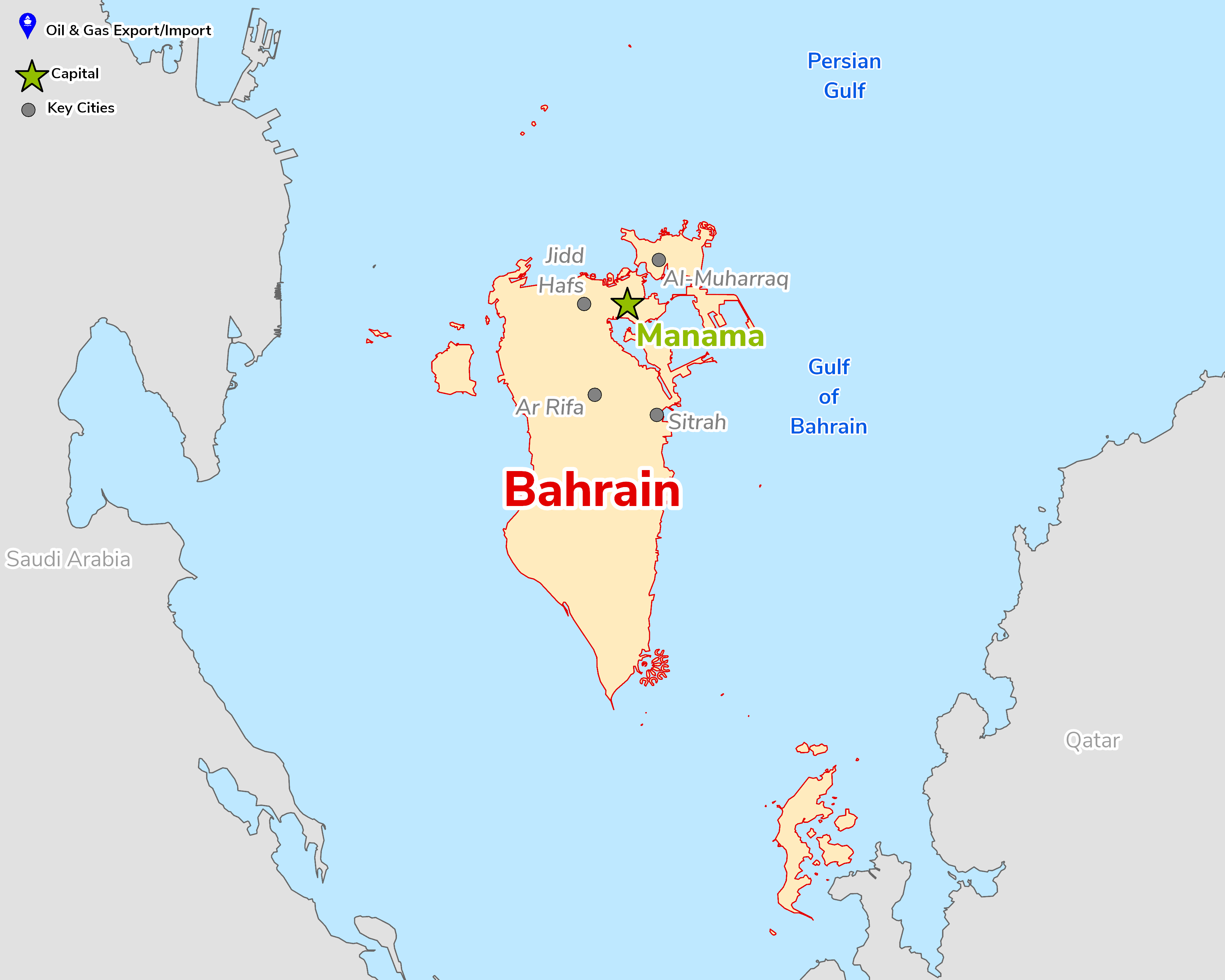
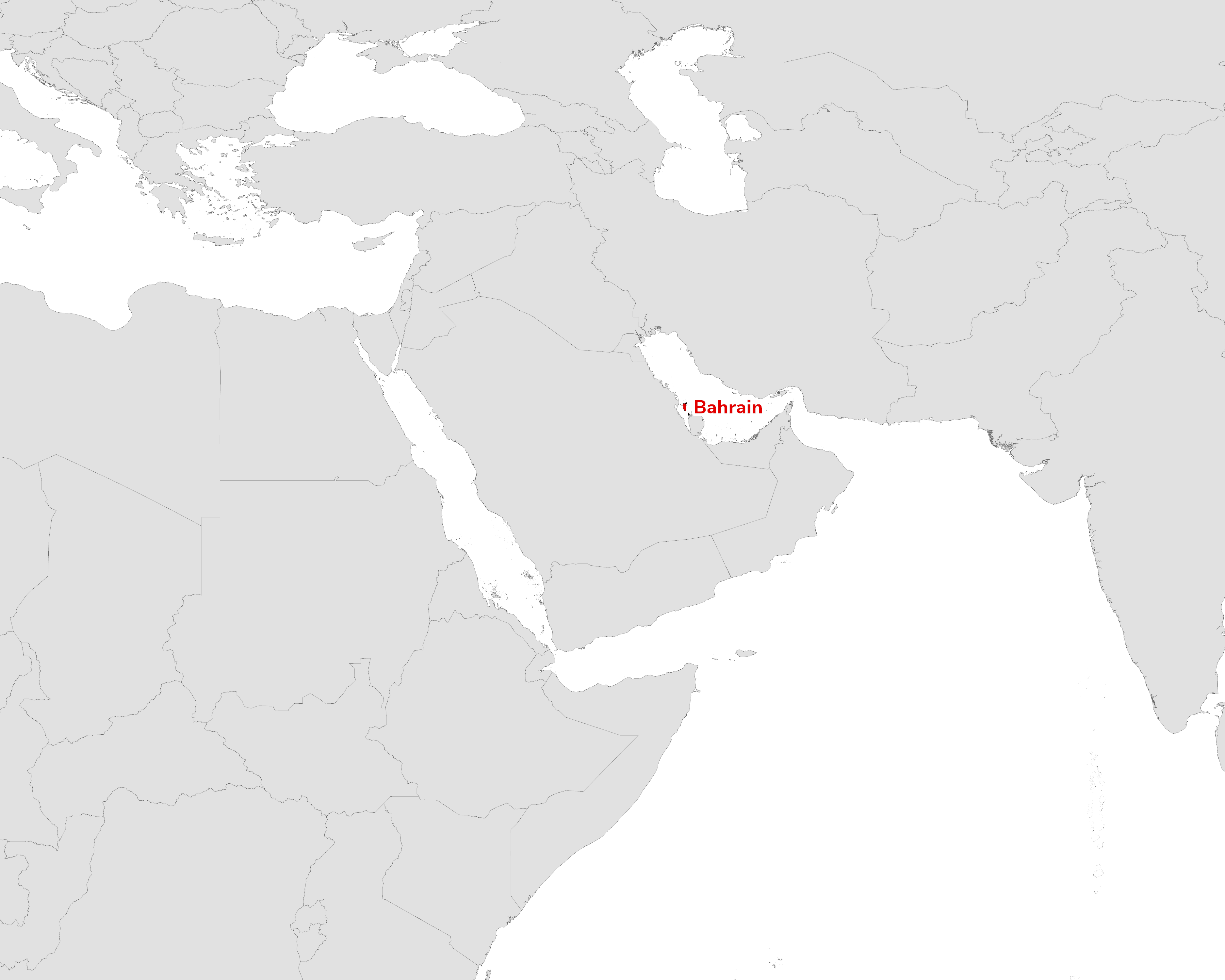
Middle East, archipelago in the Persian Gulf, east of Saudi Arabia.
Concession
There are no corporate taxes in Bahrain except for the levy of income tax on the profits of companies engaged in the exploration, production or refining of crude oil and other natural hydrocarbons in Bahrain, which is levied at a rate of 46%. Taxable income for oil companies is net profits, consisting of business income less business expenses.
Bahrain is a stable but tightly controlled monarchy. It has the GCC's highest debt burden and relies on financial support from Saudi Arabia and other Gulf neighbours. US and UK guidance praise its liberal FDI regime (100% foreign ownership in most sectors), the US–Bahrain FTA and its regulatory transparency, but flag fiscal fragility and sectarian tensions. It is the smallest hydrocarbon producer in the GCC: the Bahrain and Abu Saafa fields are mature, the 2018 Khaleej al-Bahrain tight oil and gas discovery is technically challenging, and the Bapco Modernisation Programme at the Sitra refinery is the main downstream investment.
Source: ESRI, Heritage Index, HMG Foreign & Commonwealth Office, US Department of State, International Trade Administration, International Law Review, Ernst & Young, Wood Makenzie & OGA data.

© 2024 Oil & Gas Advisors Limited
Website by Rugby Web Design
