
20.000
%
Negative
135
mm boe
50
%
While sanctions remain, the recent armed action has increased optimism that Iran may move away from its theocracy. We will keep our risk premia at 17.5% until the situation shows marked signs of improvement. Outlook maintained because we are keeping a watching brief until there is clear evidence of change. Outlook: Negative. Risk premia raised from 17.5% to 20%.
October 8, 2026
Middle East
mm bbl
bcf
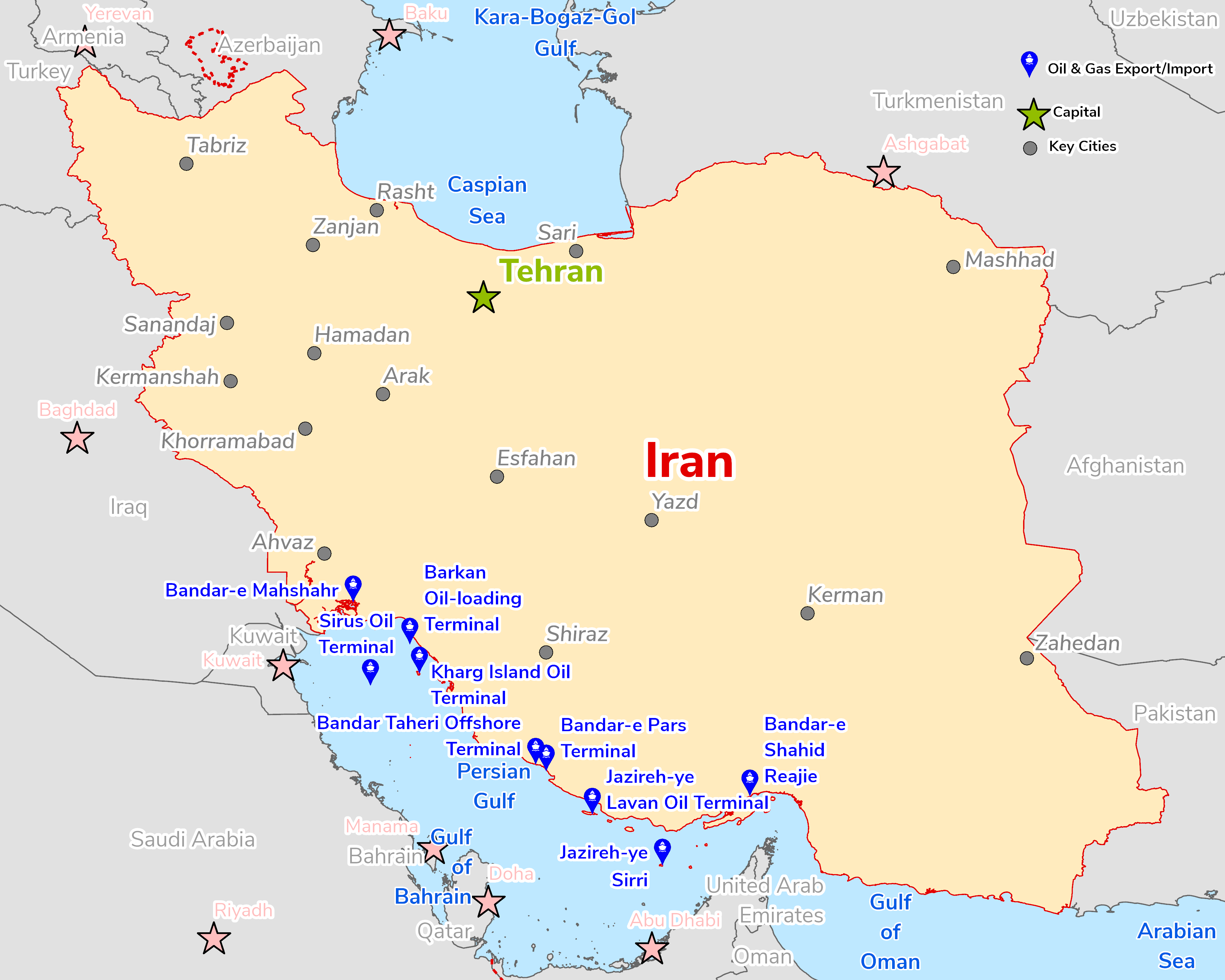
Middle East, bordering the Gulf of Oman, the Persian Gulf, and the Caspian Sea, between Iraq and Pakistan.
KSA/KSC
Service-type regime. Upstream investment is through the Iran Petroleum Contract (IPC), introduced in 2016 to replace buy-back contracts: a 20–25 year risk service contract in a joint venture with an NIOC subsidiary, under which the contractor is repaid costs and earns a per-barrel fee linked to production and field complexity, with no ownership of reserves. Western participation has been effectively blocked since US sanctions were reimposed in 2018, and UN sanctions were reinstated under the snapback mechanism in September 2025; recent IPCs have gone to domestic companies.
Iran faces acute risk following the June 2025 war with Israel, which included US strikes on nuclear facilities, and the reimposition of UN 'snapback' sanctions in September 2025. The FCDO advises against all travel and comprehensive UK, US and EU sanctions make investment impossible for Western companies. The EIA notes that Iran holds some of the world's largest oil and gas reserves (including South Pars), but underinvestment has caused severe domestic gas and power shortages. Its crude exports continue, mainly to China, via sanctions-evading shipping.
Source: ESRI, Heritage Index, HMG Foreign & Commonwealth Office, US Department of State, International Trade Administration, International Law Review, Ernst & Young, Wood Makenzie & OGA data.

© 2024 Oil & Gas Advisors Limited
Website by Rugby Web Design


