5.000
%
Neutral
48
mm boe
90
%
Kuwait remains a closed shop for independents and has been since the first Gulf War, as the government does not seek external investment. The suspension of parliament in 2024 has enabled reforms, including the debt law, and limited IOC service contracts are being considered. Outlook maintained because access for independents remains closed. Outlook: Neutral. Risk premia unchanged at 5%.
October 7, 2026
Middle East
mm bbl
bcf
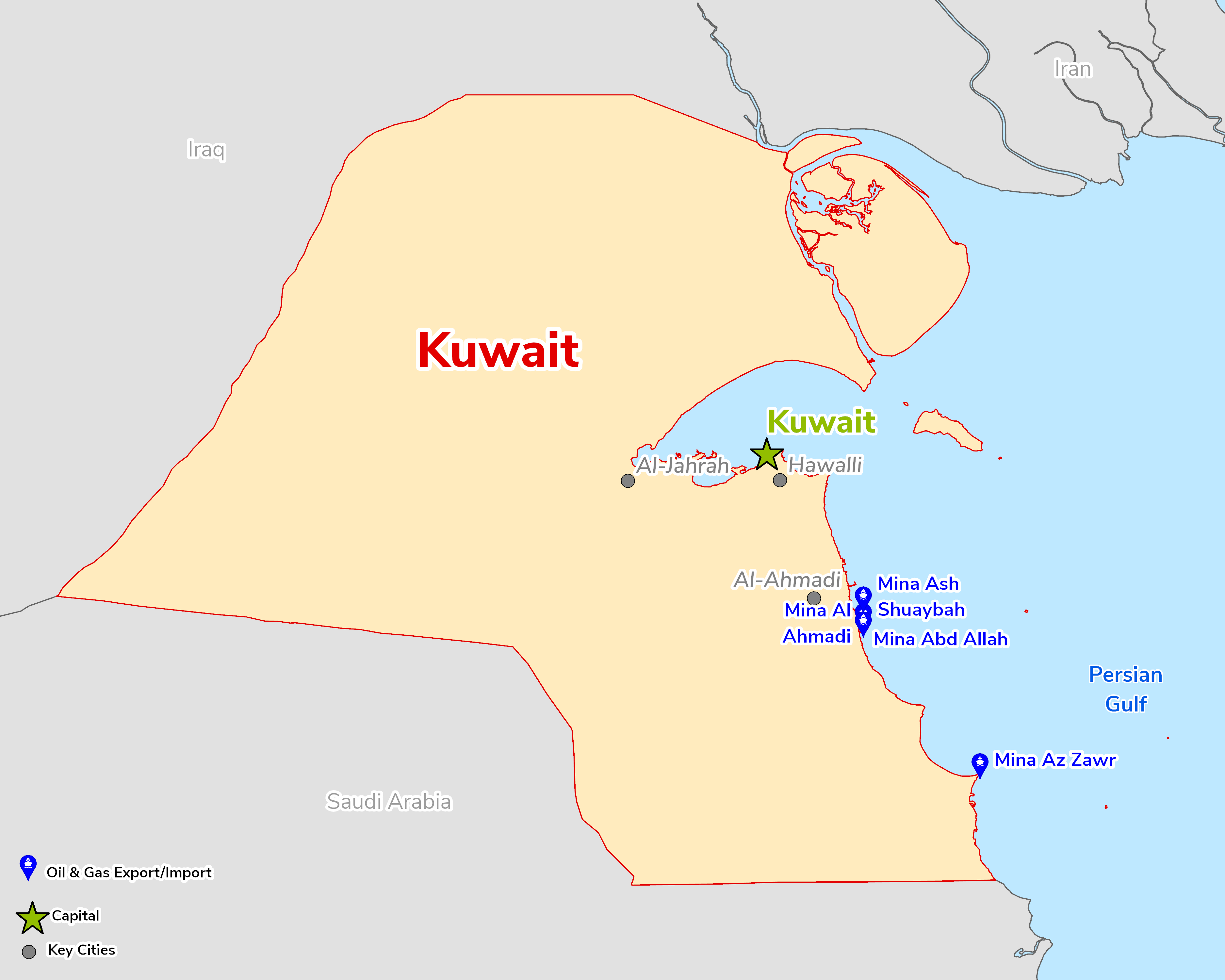
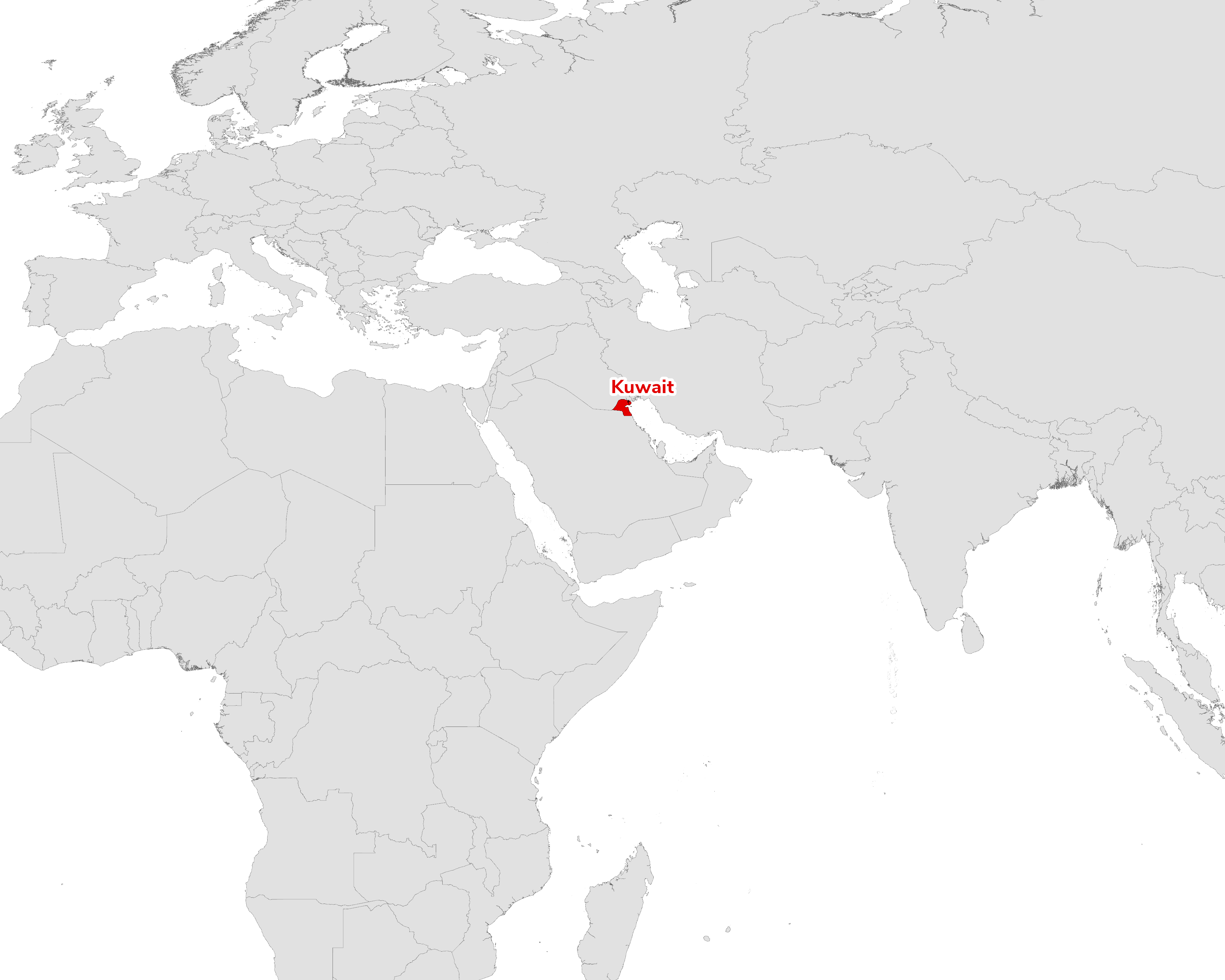
Middle East, bordering the Persian Gulf, between Iraq and Saudi Arabia.
KSA/KSC
Service-type regime. The constitution prohibits foreign ownership of hydrocarbon resources and upstream activity is reserved to Kuwait Oil Company (KOC). IOCs participate only through Enhanced Technical Service Agreements (ETSAs) and similar technical service contracts, under which they are reimbursed costs and paid a per-barrel fee, with no equity in reserves or production. Foreign (non-GCC) companies are subject to 15% corporate income tax, and a 15% Domestic Minimum Top-up Tax applies to large multinational groups from 2025.
Emir Mishal al-Ahmad suspended parliament and parts of the constitution in May 2024 for up to four years, ending years of executive–legislative gridlock and allowing a long-delayed debt law to pass in 2025. US and UK guidance cite bureaucracy, a large public sector and sponsorship requirements, although FDI rules are gradually liberalising. The EIA notes that Kuwait produces around 2.5 million b/d and targets 4 million b/d of capacity. The Al-Zour refinery is now fully operational, and Kuwait imports LNG for power, while development of the Durra gas field with Saudi Arabia is contested by Iran.
Source: ESRI, Heritage Index, HMG Foreign & Commonwealth Office, US Department of State, International Trade Administration, International Law Review, Ernst & Young, Wood Makenzie & OGA data.

© 2024 Oil & Gas Advisors Limited
Website by Rugby Web Design

